The Midford Valley: A Local's Guide
By the hosts of The Old Workshop, Monkton Combe
We have lived in Monkton Combe for over twenty years, and the Midford Valley still surprises us. It has accumulated history in the way that English countryside does — quietly and with few signs. On a Tuesday morning in November you can walk for an hour through ancient woodland, along the remains of a Georgian coal canal and past a viaduct that once appeared in a classic British film, and not meet another soul — yet be back in Bath in ten minutes. That combination of deep countryside peace and urban accessibility is genuinely rare. It is why we moved here and why we have never wanted to leave. Little of the history is signposted or curated. You piece it together yourself, which is part of the pleasure.
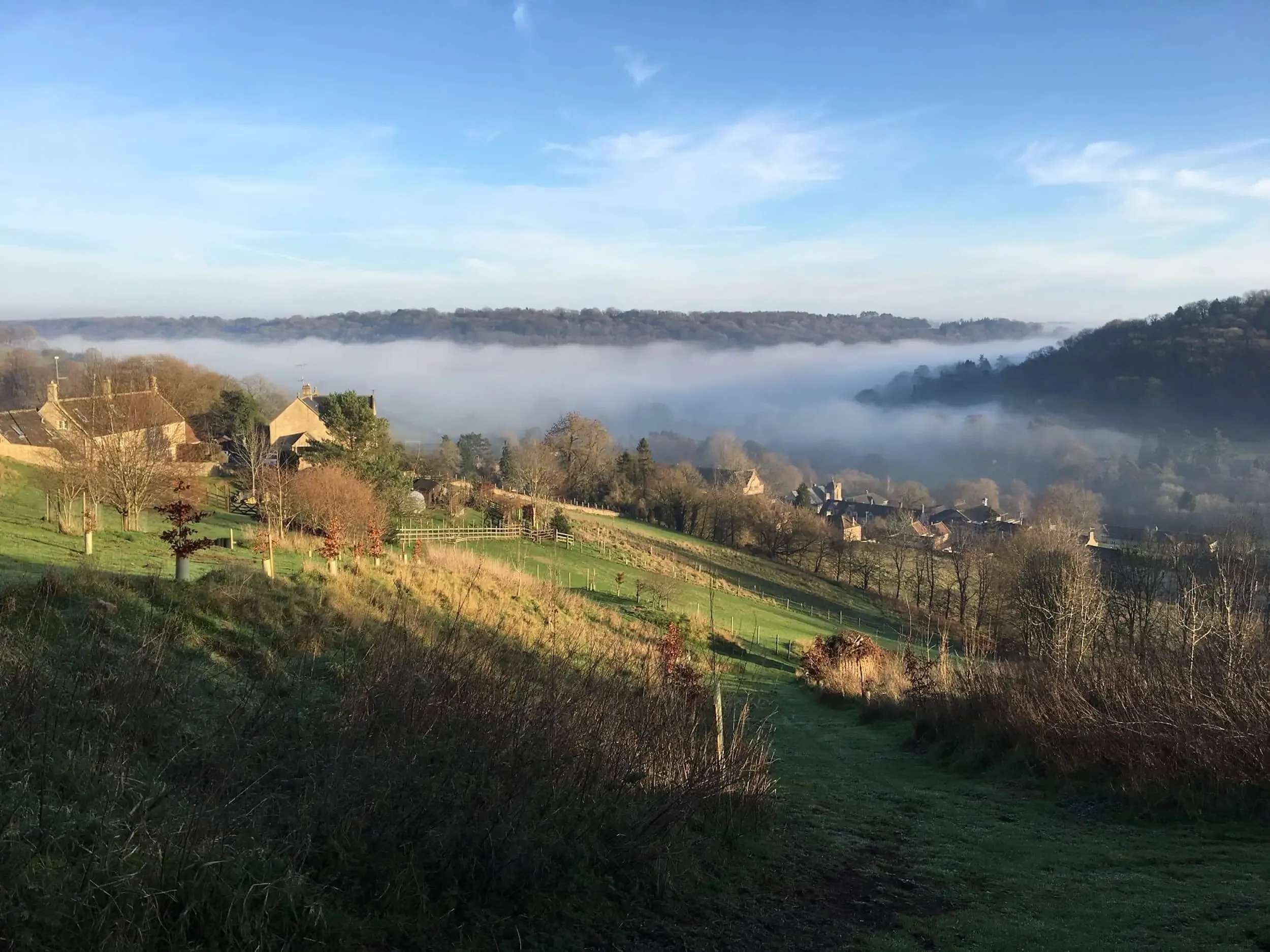
The Old Workshop, Monkton Combe sits high up on the side of the Midford Valley, looking south across the Midford Brook to the wooded slopes beyond. Walks in the valley begin at the front door.

Looking down the Midford Valley
What is the Midford Valley?
The Midford Valley is a stretch of Somerset countryside running south from Monkton Combe through the hamlet of Midford and into the hills beyond. It is carved by the Midford Brook, which gathers the waters of the Cam Brook and Wellow Brook at Midford village before flowing north to join the River Avon near Monkton Combe. The valley forms part of the Cotswolds Area of Outstanding Natural Beauty.
What makes the valley distinctive is the layering of history. Coal, geology, railways, and English rural life have all left their marks here, and you can trace each of them on a single afternoon's walk.
The landscape here has a distinctive character that the geology explains. Bath and its surrounding hills are built from a warm yellow limestone — the famous Bath Stone, quarried for centuries from the hillsides of Combe Down, just above the valley. The same stone appears in every bridge, farm building, and cottage wall you pass on the valley paths. Below the limestone lies a layer of Fullers Earth clay, and it is the softness of this layer that gives the valley its steep, wooded sides: over millennia, limestone from above has slipped and tumbled down the slopes, creating the dense hanging woods that make the valley feel so enclosed and private. The valley floor, by contrast, is open meadow — lush, green, and grazed by cattle — which gives the landscape a particular quality of contrast: open at the bottom, heavily wooded on the sides, with long views along the valley in both directions.

Monkton Combe from halfway down a drung
Monkton Combe
Monkton Combe itself is a small, quiet village of Bath stone cottages clustered around the church of St Michael, which dates in its present form to 1865. The village name tells its own story: "combe" is an old word for a narrow valley, and "monkton" records that the land here once belonged to Bath Abbey — monks farming this valley long before the school or the canal arrived. The churchyard contains the grave of Harry Patch, who died in 2009 as the last surviving British soldier to have served in the First World War. His grave is rarely without flowers or poppies.
The village is closely associated with Monkton Combe School, an independent school founded here in 1868, whose Bath stone buildings are a prominent part of the village streetscape. The school's boathouse sits on the River Avon just below the Dundas Aqueduct, and rowing is a long-standing tradition that has produced five Olympic rowing medallists over the years.
A Valley That Changed Science
The valley's most remarkable historical claim is scientific. In the 1790s, a young surveyor named William Smith came to Tucking Mill — a small hamlet within the wider Midford valley — to oversee the construction of the Somerset Coal Canal. As he walked the valley and studied the rock layers exposed by the excavations, he began to understand something nobody had grasped before: that rock strata occur in a consistent, predictable order, and that each layer contains its own distinctive fossils. It was observations that began in and around this valley that led Smith to produce the first geological map of an entire nation, published in 1815. He is now known as the Father of English Geology, and a stone plaque on Tucking Mill House marks where he lived while doing the work that changed how we understand the planet beneath our feet. The Midford Valley and surrounding area is where modern geology began.
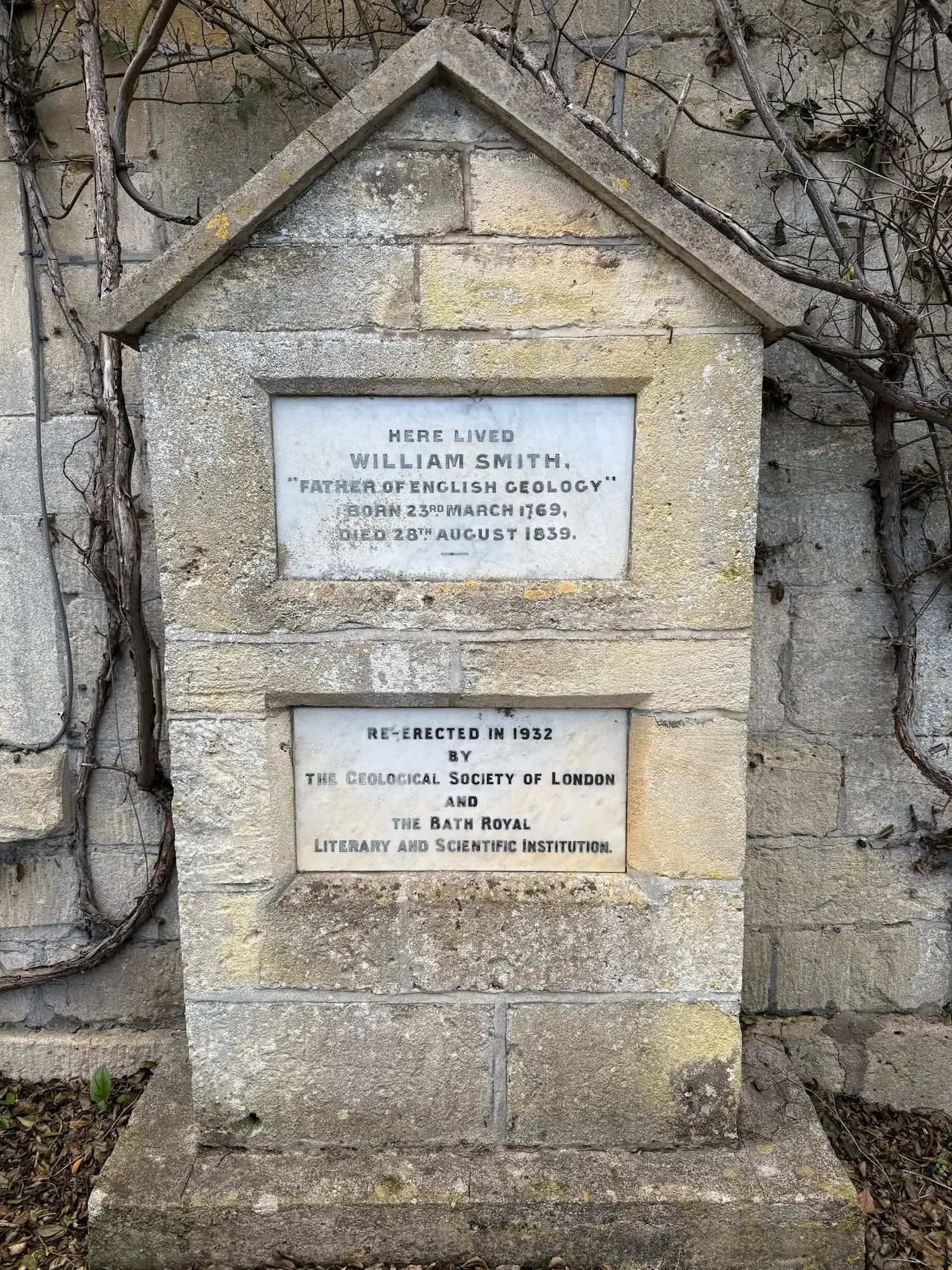
William Smith’s memorial plaque
Canals, Railways, and a Famous Film
The Somerset Coal Canal, completed around 1800, carried coal from the pits around Radstock northward through the valley to join the Kennet and Avon Canal at Dundas Aqueduct, just below Monkton Combe. At its height it was an important industrial artery. By the 1880s the railways had begun to take over, and the canal closed in 1902. Much of its route is still traceable as you walk the valley paths — look for the level embankments and the remains of stone bridges crossing what was once water.
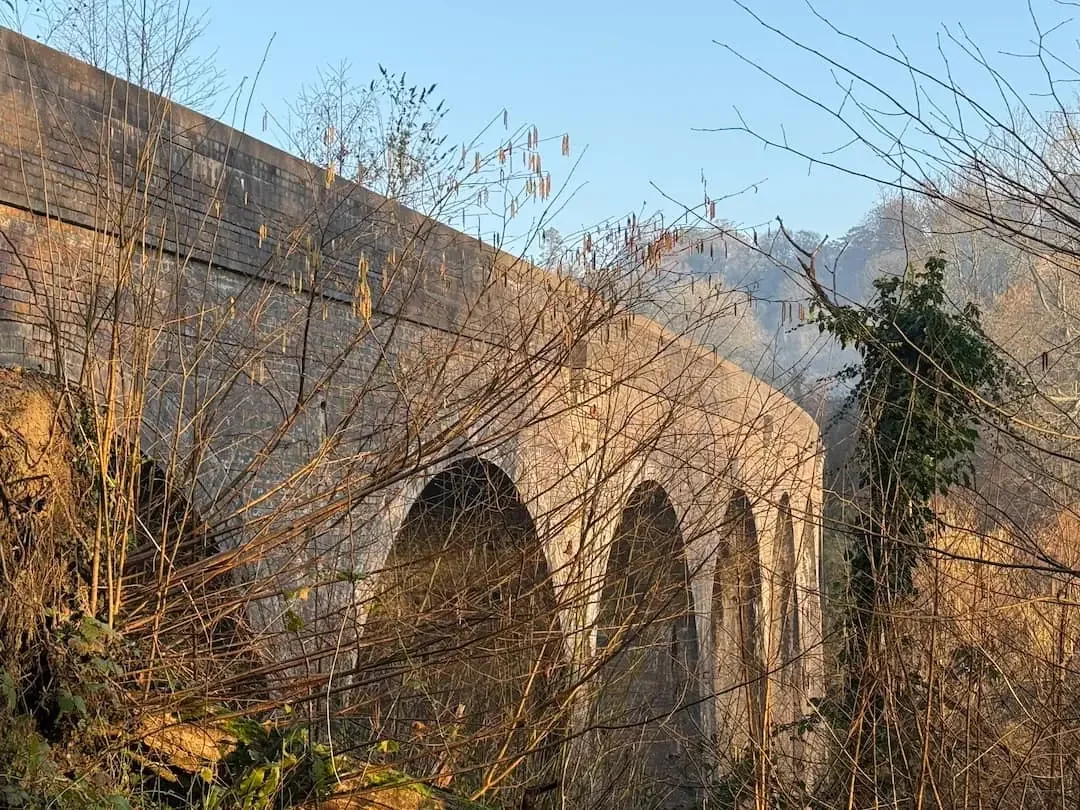
The railways left their own marks. The Somerset and Dorset Joint Railway built a striking viaduct across the valley in 1874, carrying its Bath to Bournemouth line over the Cam Brook. Midford station, which sat at the foot of the viaduct, became briefly famous in 1953 when it was used as a filming location for the Ealing comedy The Titfield Thunderbolt — a film about a village fighting to save its local branch line that has a particular resonance given what subsequently happened: the entire Somerset and Dorset line was closed in the Beeching cuts of 1966.
That same former railway line has since been given a remarkable new life as the Two Tunnels Greenway — a traffic-free walking and cycling route that passes through two restored Victorian tunnels, including Combe Down Tunnel, at over a mile the longest walking and cycling tunnel in Britain. The Greenway connects Bath southward to Midford, where it joins National Cycle Route 24 and the Colliers Way heading south toward Radstock. The Two Tunnels Greenway also forms part of a popular 13-mile circular route that can be joined at any point, going in from Midford to Bath, taking the River Avon towpath through Bath, then the Kennet and Avon Canal towpath back to the Dundas Aqueduct and the Midford valley. The full circuit is accessible directly from the cottage.
See our walks and cycling guide for full route details.
Tucking Mill viaduct
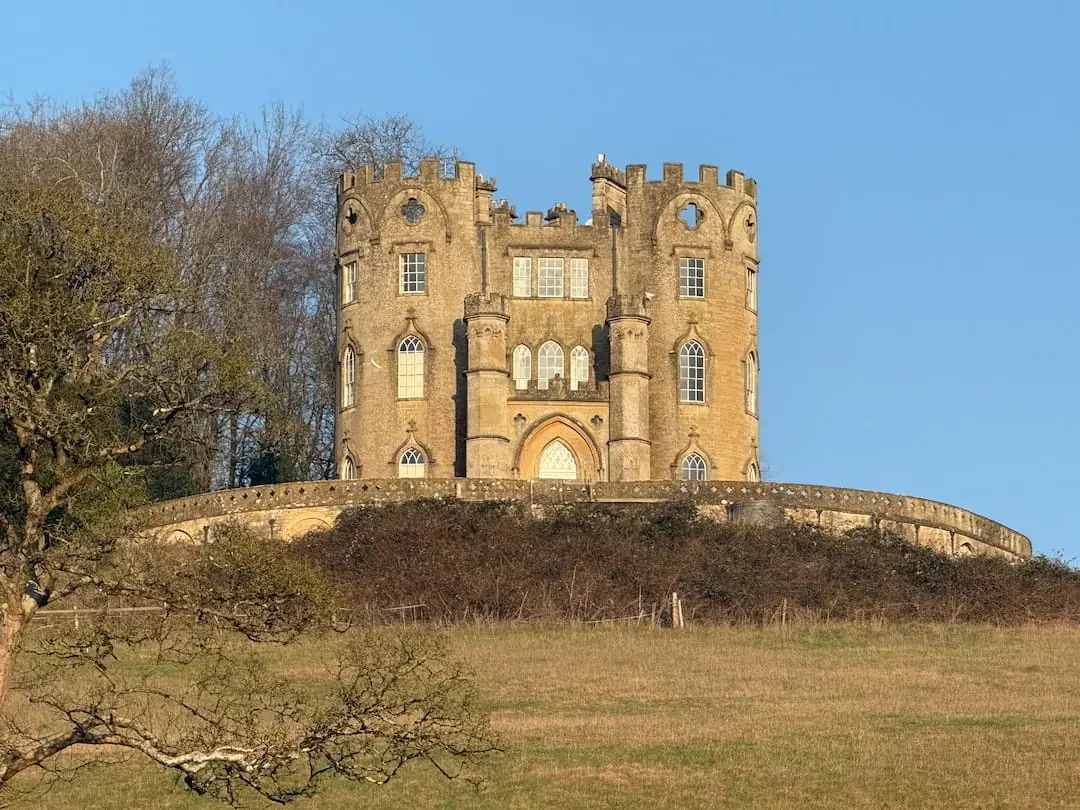
Midford Castle from the Two Tunnels Greenway
Midford
A mile south of Monkton Combe, the hamlet of Midford sits at the point where the Cam Brook and Wellow Brook meet to form the Midford Brook. It is a small place, but one with a remarkable concentration of history. The Somerset and Dorset Railway viaduct still straddles the valley here, and the remains of a smaller viaduct that once carried the Somerset Coal Canal are visible close by — two layers of industrial history superimposed on the same stretch of valley.
On the hillside above the village sits Midford Castle, one of the most eccentric buildings in Somerset. Built in 1775 for Henry Disney Roebuck, it is a Grade I listed Gothic folly whose floorplan is shaped like the ace of clubs — local tradition holds that Roebuck won the money to build it by gambling on exactly that card, though historians are sceptical. The castle has had an eventful ownership history: it was home for many years to the novelist Isabel Colegate, best known for The Shooting Party, before being sold to the actor Nicolas Cage in 2007. It has since been sympathetically restored.
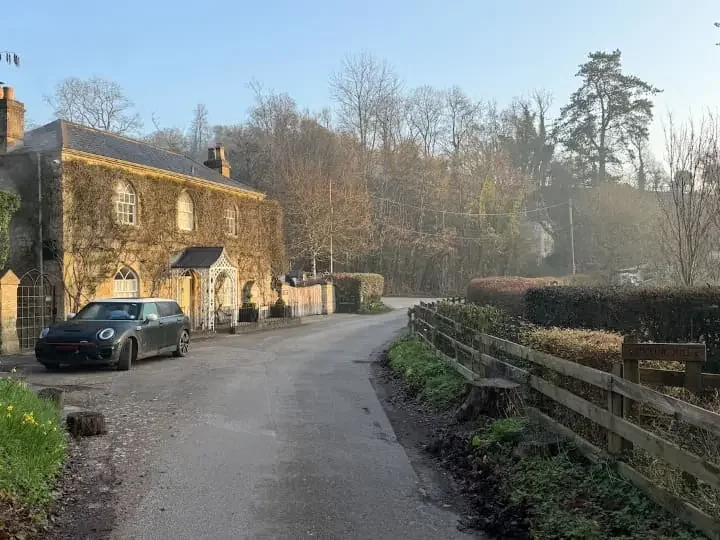
William Smith’s house
Tucking Mill
Between Monkton Combe and Midford lies the small hamlet of Tucking Mill, which takes its name from the medieval practice of fulling — or "tucking" — woollen cloth using water-powered hammers to remove oils and dirt. It was here that William Smith lived while surveying the Somerset Coal Canal in the 1790s, developing the geological theories that would change how we understand the very ground we walk on. The hamlet once lay at the junction of the Somerset Coal Canal and two separate railway lines, making it a busy industrial hub in an otherwise quiet valley. In the 1880s the site was further transformed into a Fullers Earth works, processing the distinctive absorbent clay mined from the hillsides above for use in oil refining and pharmaceuticals — an industry that continued until the end of the Second World War.
Walking in the Midford Valley
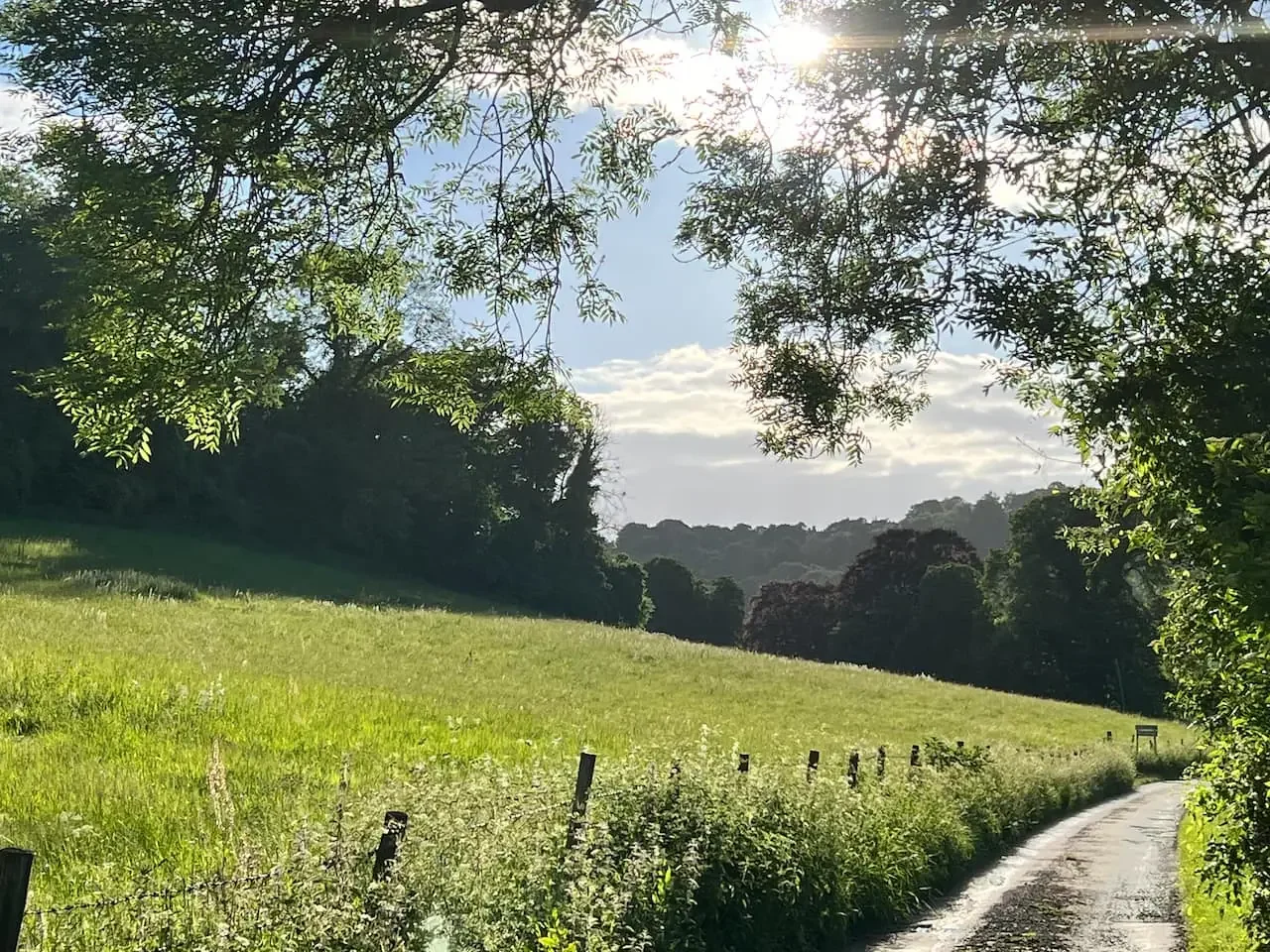
Waterhouse Lane and the Midford valley
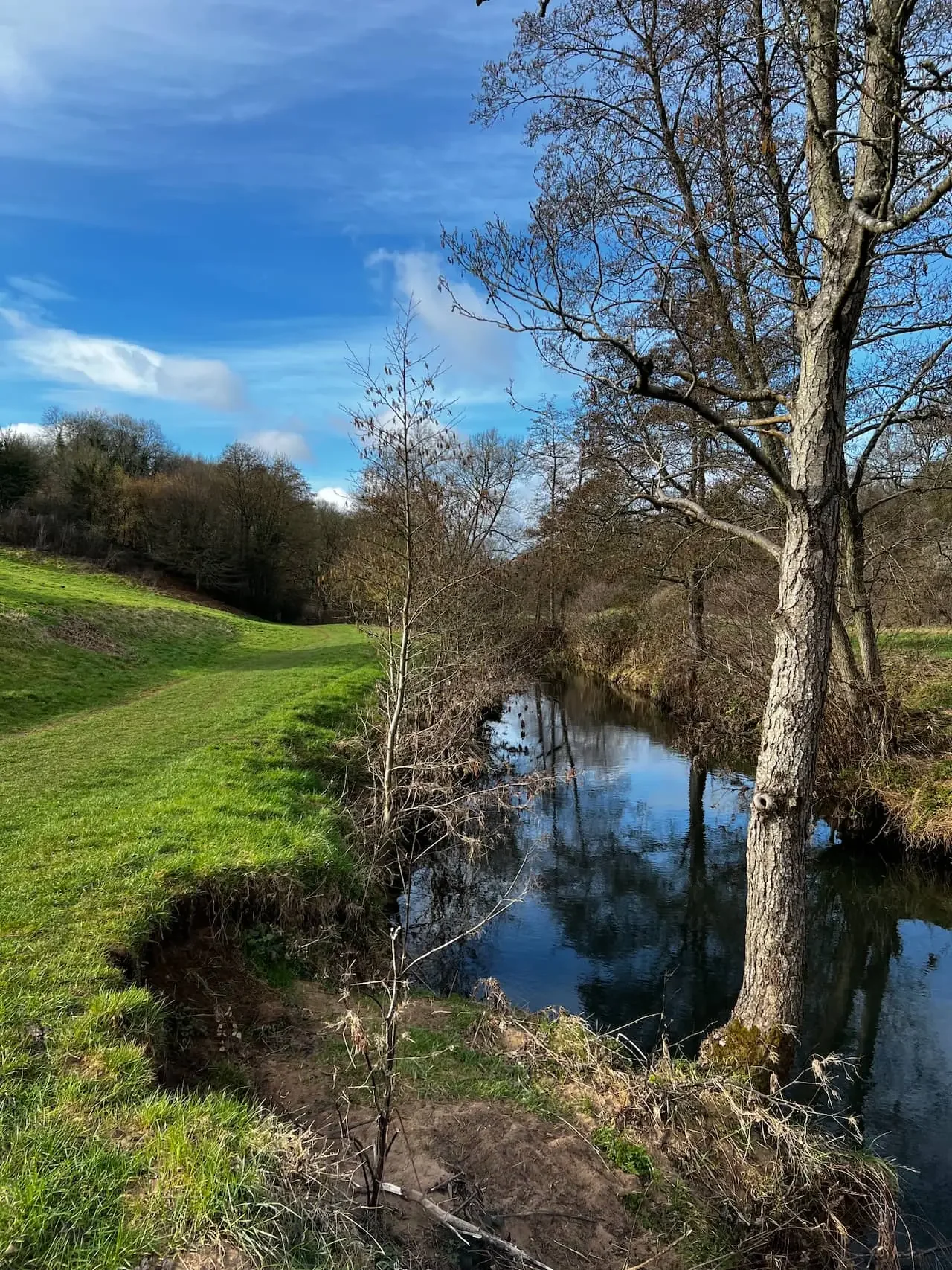
Midford Brook in summer
The walks from The Old Workshop, Monkton Combe begin at the front door. Within a few metres you are on footpaths heading south into the valley. Directly opposite the cottage drive, one of the village's drungs descends steeply down into the village — narrow drystone-walled paths that were used to drive livestock. The walls look original, and the word itself is wonderfully old: a Somerset term derived from the same Old English root as "throng", meaning to squeeze or press through a narrow space.
More detail on the drungs and other routes is on our walks and cycling guide.
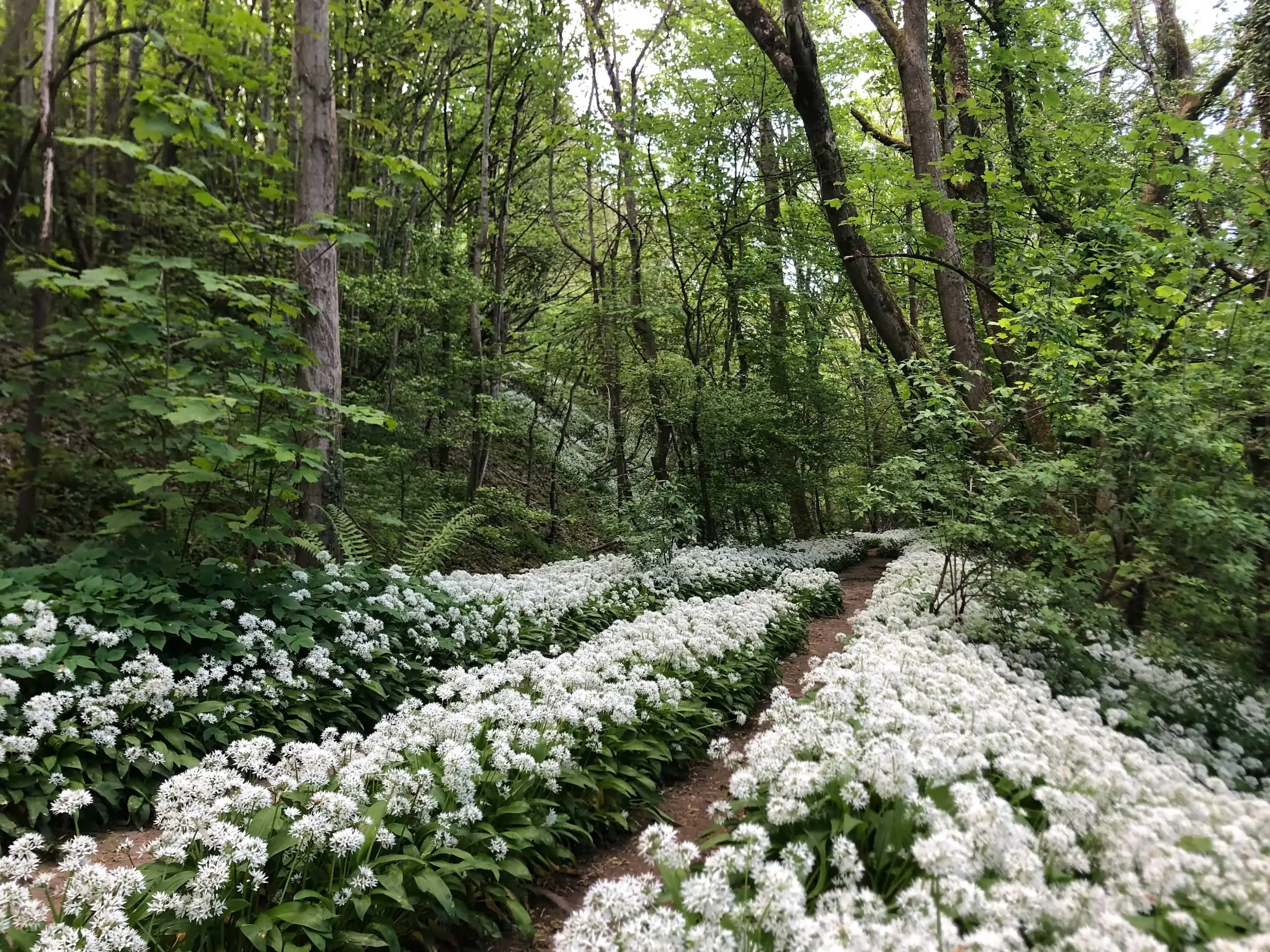
Wild garlic in the woods next to Midford Brook, on the towpath of the old coal canal
The most popular route for guests takes you through fields and woodland above the Midford Brook — part of the way following the bed of the old Somerset Coal Canal, now dry and overgrown but still clearly traceable — with the Packhorse pub at South Stoke as a fine destination to aim for at the end of the walk. The pub sits just beyond the valley, at the top of the hill above South Stoke, and the walk takes around one and a half to two hours at an easy pace. In spring — usually at its best in April and early May — the floor of the woods along the west side of the brook is carpeted with wild garlic, and the scent and the sight of it is delightful. It feels remote and private, yet Bath is less than two miles away.
A practical note: the valley paths cross fields and can become muddy after rain, particularly in winter and early spring. We recommend waterproof walking shoes or boots for anything other than the driest summer days. If you have questions about a specific route before you arrive, please do get in touch.
Wildlife
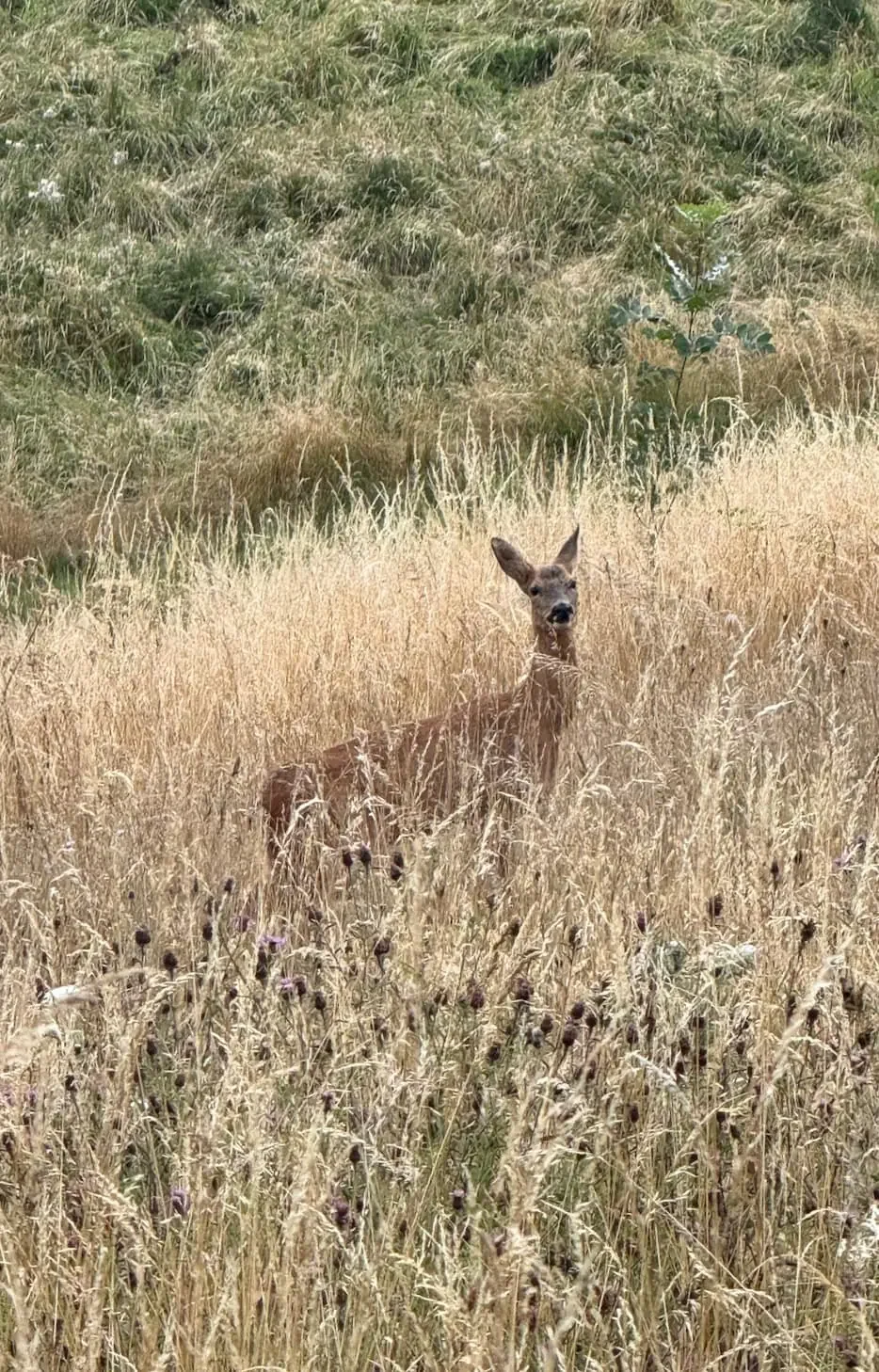
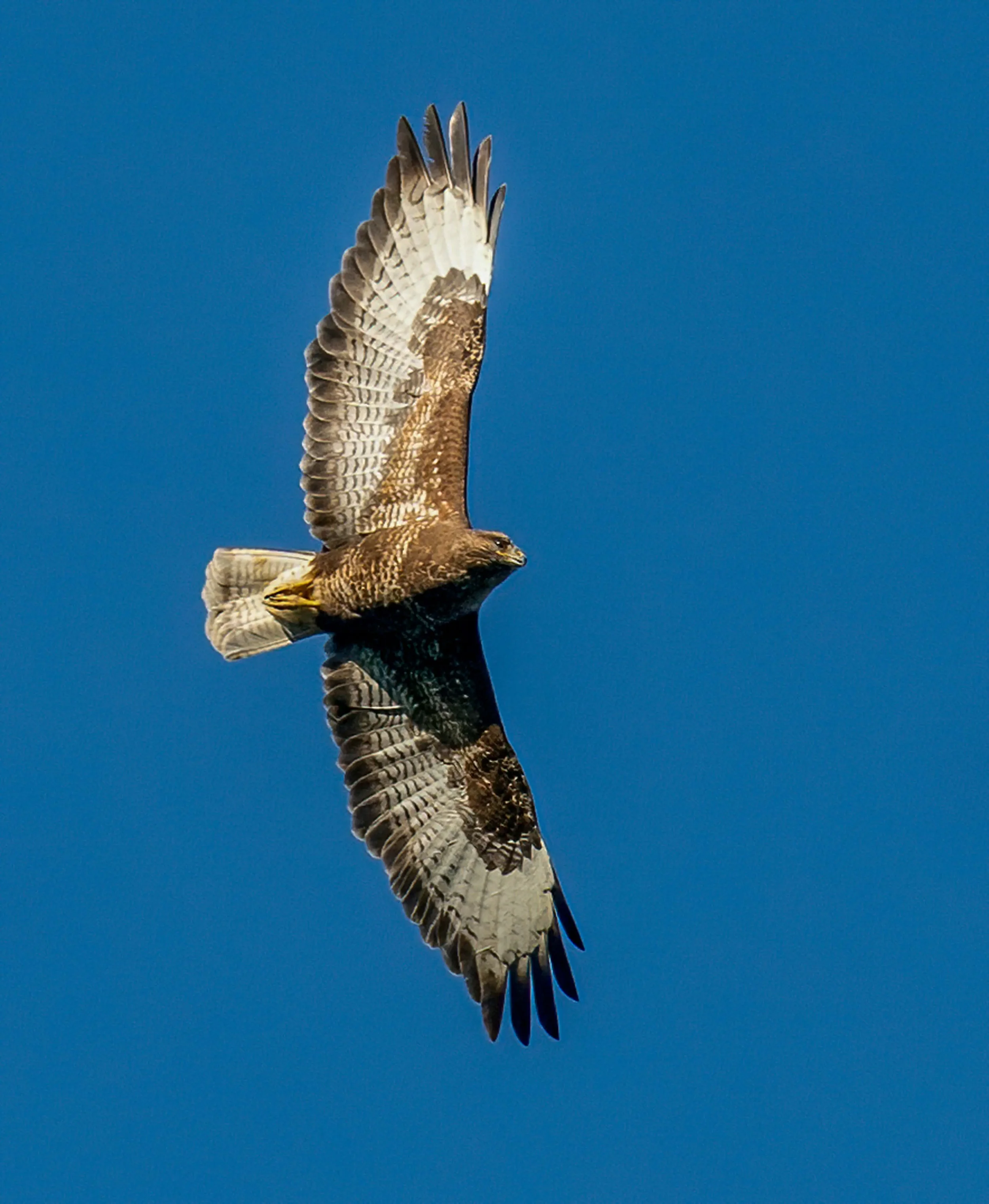
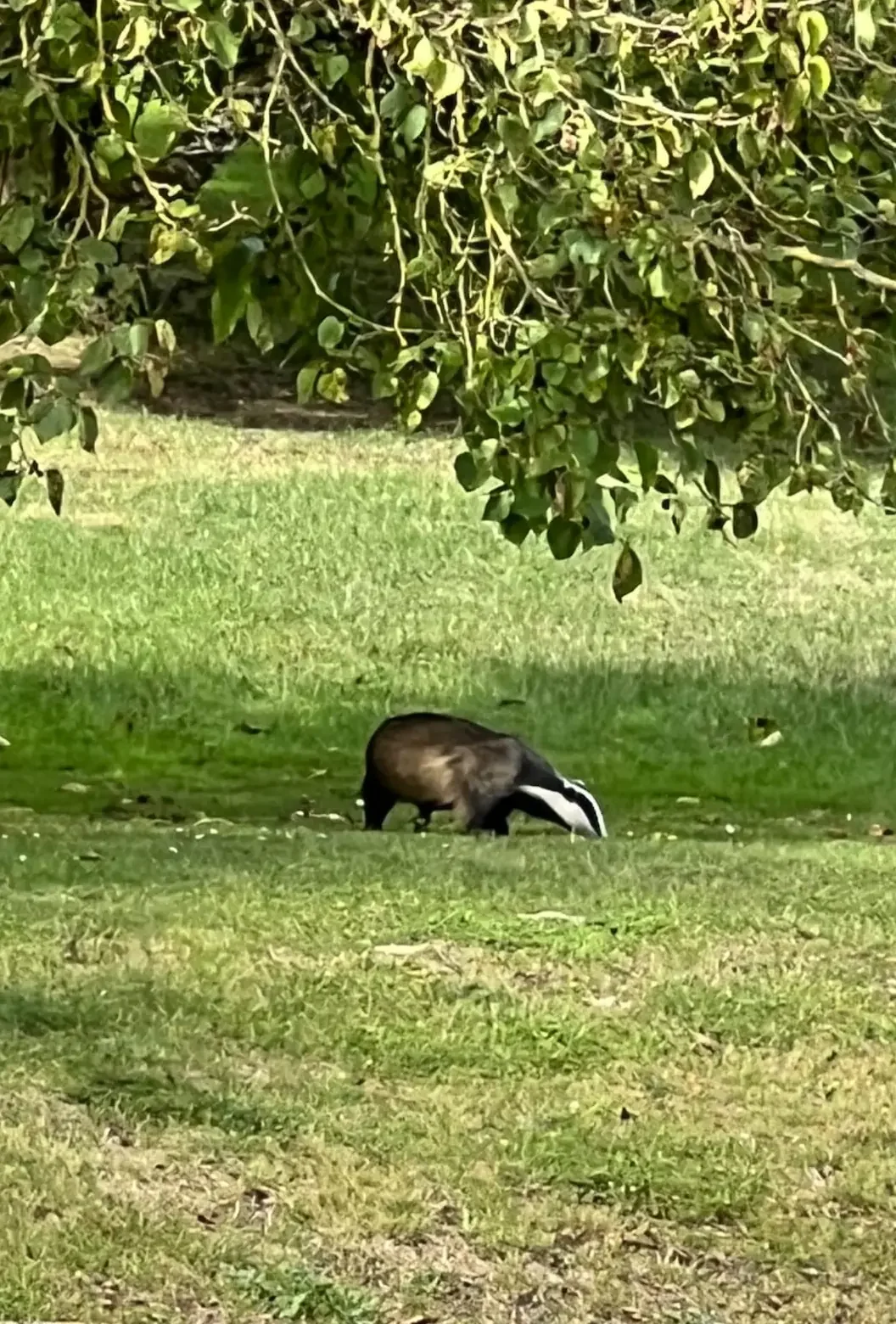
Wildlife seen from the garden of The Old Workshop, Monkton Combe
The valley has a quiet richness of wildlife that rewards patience and early rising.
Buzzards are the most visible presence: we see them almost every day, circling high over the valley on the thermals, their distinctive mewing calls carrying a long way on a still morning. Red kites have begun to appear more recently — still a relatively rare sighting here, which makes them all the more memorable when they do glide over. Pheasants are abundant at certain times of year, and owls are heard calling most evenings in the right season. Deer emerge from the woods into more open ground — including the orchard behind The Old Workshop, Monkton Combe — especially at dawn and dusk. Look out for bats if you’re sitting peacefully on the patio at dusk - the first thing you may be aware of is a darting movement in the corner of your eye. Foxes appear occasionally; badgers and otters are here but rarely seen, which makes a sighting all the more special.
In spring and summer the hedgerows and woodland edges are busy with smaller birds, and the valley floor meadows attract butterflies through the warmer months. On summer days, large and beautiful damselflies hover in the foliage along the banks of the Midford Brook. The brook also supports kingfishers — look for the flash of iridescent blue low over the water.
The Seasons
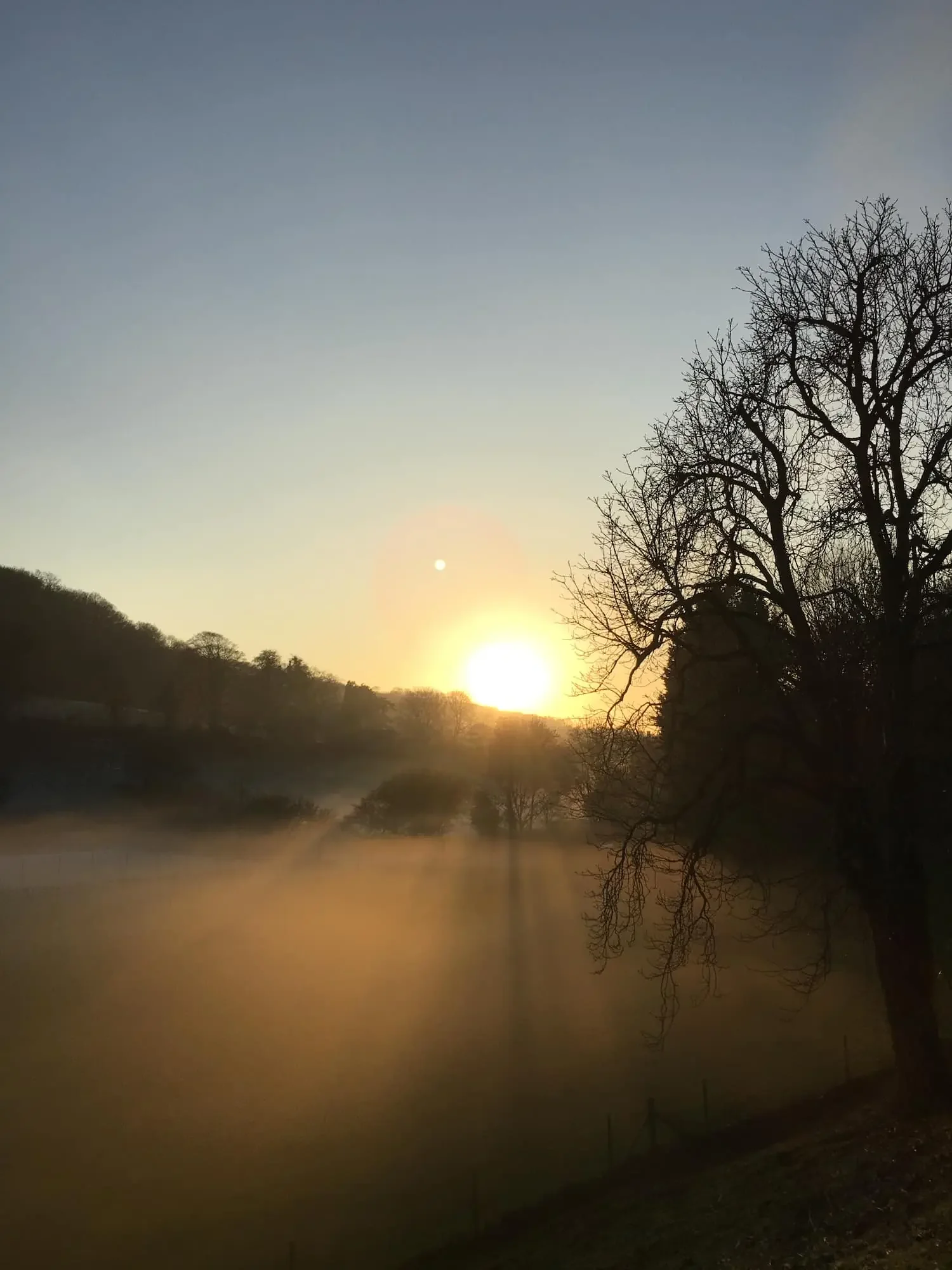
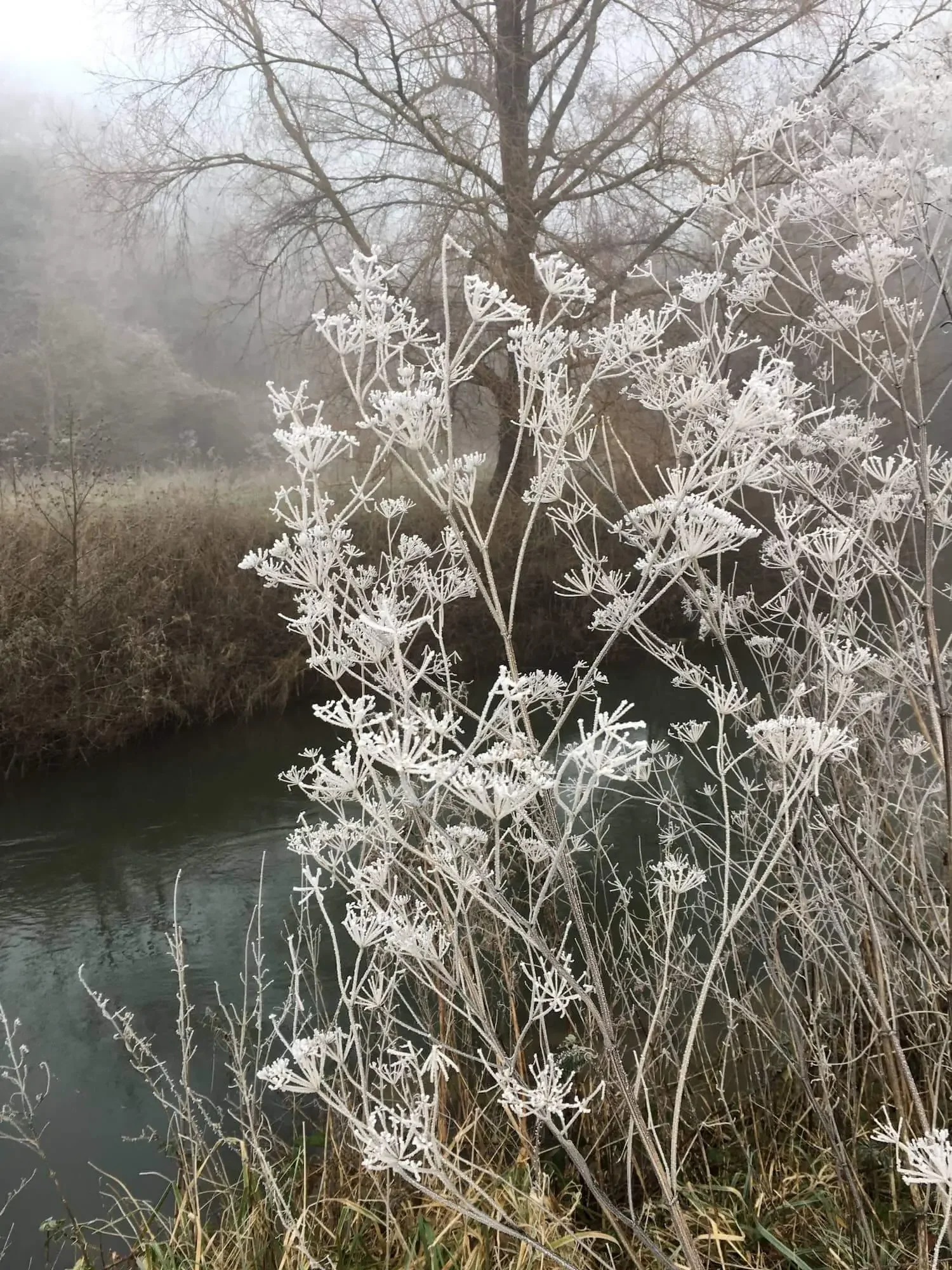
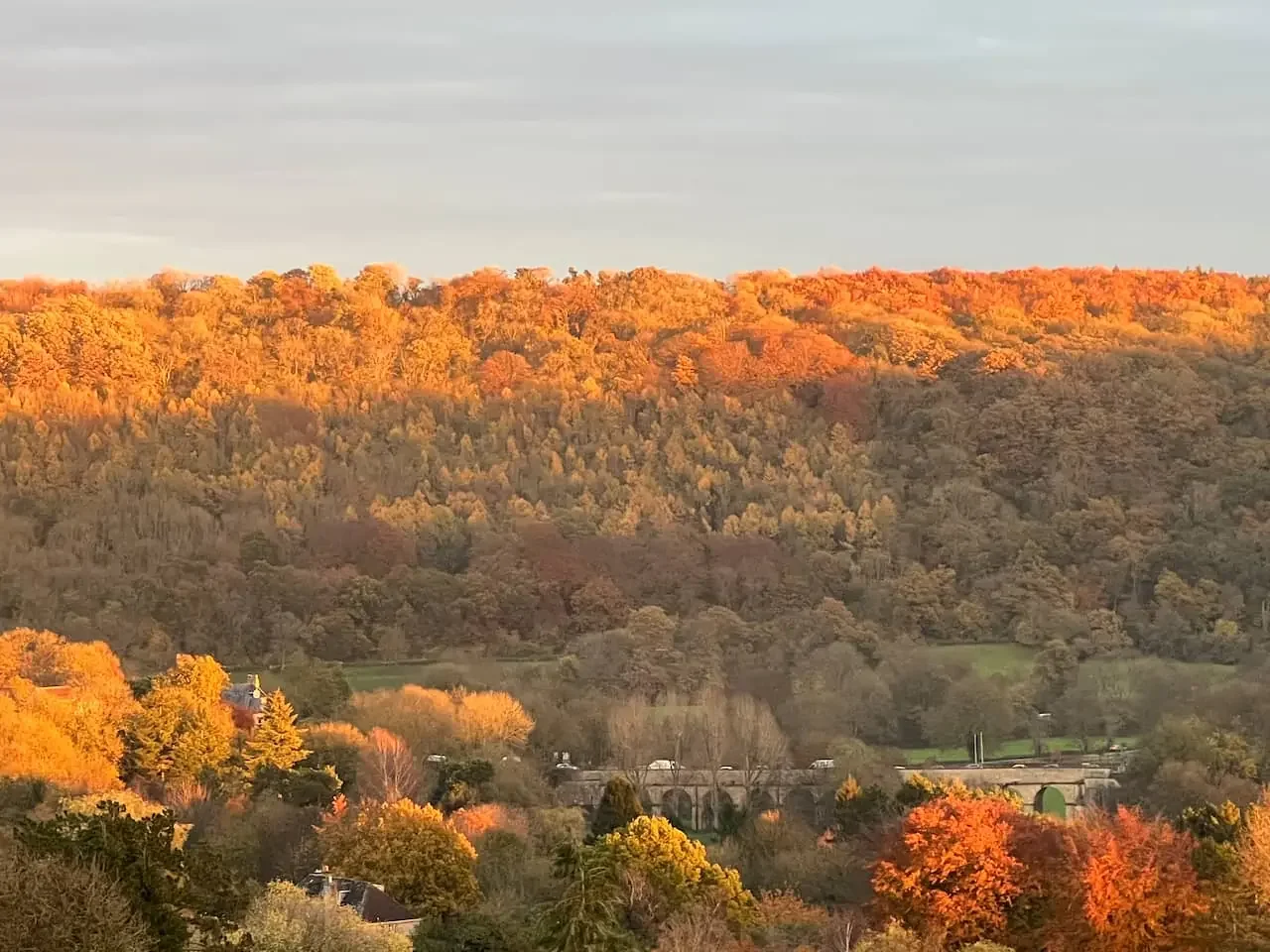
The valley has a distinct character in each season. Spring is perhaps the most dramatic: the wild garlic and bluebells arrive in succession, the woodland fills with birdsong, and the valley comes back to life after winter with a particular energy. Summer is the easiest time to walk but also the busiest, though even then you are unlikely to encounter more than a few other people on the paths. Autumn and winter bring one of the valley's most memorable sights: on many mornings the mist settles in the valley below, and The Old Workshop, Monkton Combe sits above it, looking down over a sea of white. When you leave the cottage and climb over the ridge toward Bath, the city comes into view below in its own natural bowl — while behind you the Midford Valley is still wreathed in mist. Winter is when the valley feels most private — the bare trees open up long views through the woodland, the paths are quiet, and you are very unlikely to share them with anyone.
Getting Here and Getting Around
The Old Workshop, Monkton Combe is at the northern end of the Midford Valley, and the valley is accessible on foot directly from the cottage — our welcome information includes a map of the main routes. To get to the valley from Bath city centre is approximately ten minutes by car. It is also reachable on foot or by bike via the Two Tunnels Greenway, which is longer but a particularly lovely route out from the heart of the city to the valley.
Thinking about staying at The Old Workshop, Monkton Combe and exploring the valley for yourself?